


Choosing the right website platform is one of the most important decisions you will make when building an online presence. Whether you are launching a new company, expanding an established brand or preparing to sell products online, two platforms come up again and again: WordPress and Shopify.
Both are powerful, but they solve different problems. WordPress gives you flexibility, customisation and full content management control, while Shopify is purpose-built to make selling online simpler.
So, when comparing WordPress vs Shopify, which platform is better for your UK business?
The short answer: choose WordPress if your growth depends on content, SEO and lead generation, and choose Shopify if your main objective is selling products online. The fuller answer depends on your business model, budget, technical requirements and long-term growth plans.
In this guide we compare WordPress and Shopify across SEO, ecommerce functionality, cost, design, speed and scalability, so you can decide which platform fits your UK business.
What Is WordPress?

WordPress is an open-source content management system (CMS) that lets businesses build and manage almost any type of website. It powers everything from simple business sites and blogs to complex ecommerce platforms.
Unlike Shopify, WordPress does not include ecommerce functionality by default. Businesses can integrate WooCommerce, a popular ecommerce plugin, to turn their WordPress website into a fully functional online store.
Key features of WordPress include:
- Flexible website design: Create customised layouts, landing pages and website experiences.
- Content management: Publish blogs, service pages, case studies and other content.
- SEO flexibility: Use tools such as Rank Math and Yoast SEO to manage technical and on-page SEO.
- Ecommerce integration: Add WooCommerce to manage products, orders, payments and shipping.
- Custom functionality: Integrate booking systems, CRM platforms, membership features and third-party applications.
- Website ownership: With self-hosted WordPress, you have control over your website files, database and hosting environment.
WordPress is particularly suitable for service-based businesses, professional companies, agencies and brands that want complete control over their website structure and digital marketing strategy.
If your business needs a flexible, performance-focused website, working with a professional WordPress agency can help you build a website around your specific goals.
What Is Shopify?
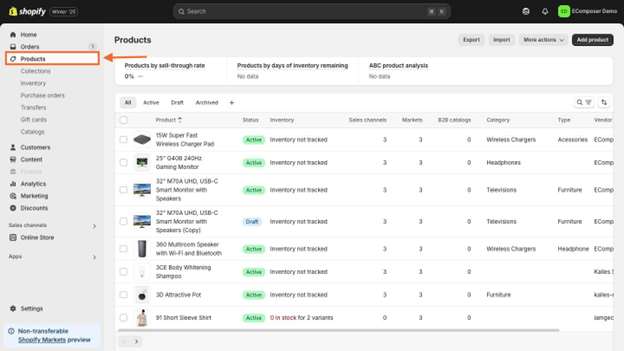
Shopify is a hosted ecommerce platform built specifically for businesses that want to sell products online. It provides the essential tools needed to launch, run and grow an online store without having to look after separate hosting infrastructure.
Shopify brings ecommerce operations together in one place, which makes day-to-day store management simpler for business owners.
Key features of Shopify include:
- Product management: Add products, manage inventory and organise collections.
- Payment processing: Accept online payments through supported payment providers.
- Order management: Track customer orders, fulfilment and delivery.
- Responsive themes: Create mobile-friendly online shopping experiences.
- App integrations: Extend store functionality through Shopify apps.
- Built-in SEO features: Manage meta titles, descriptions, image alt text and other essential SEO elements.
- Marketing tools: Support promotions, discount codes, email marketing and sales campaigns.
Shopify is a strong option for retail businesses, ecommerce startups, clothing brands, beauty businesses and established retailers looking to expand their online sales.
Businesses that want a professionally designed store can work with a specialist Shopify agency to create a store that reflects their brand and supports their sales objectives.
WordPress vs Shopify: Key Differences at a Glance
Before looking at each feature in detail, here is a quick comparison of WordPress and Shopify.
| Feature | WordPress | Shopify |
| Main purpose | General website and CMS | Ecommerce platform |
| Hosting | Separate hosting required for self-hosted WordPress | Hosting included |
| Ecommerce | Requires WooCommerce or another solution | Built-in |
| Website customisation | Extensive flexibility | Theme and platform-based customisation |
| SEO capabilities | Extensive control through plugins and development | Built-in SEO features |
| Blogging | Advanced content management | Built-in blogging |
| Payment processing | Requires payment gateway integration | Supported payment providers |
| Security | Requires active website management | Platform-managed infrastructure |
| Maintenance | Updates and backups need management | Core platform maintenance managed |
| Scalability | Highly flexible with suitable infrastructure | Scales through Shopify plans and ecosystem |
| Best suited for | Business websites and flexible ecommerce | Product-focused online stores |
The main difference is that WordPress gives you more control over your overall website, while Shopify simplifies ecommerce management through its hosted platform.
1. WordPress vs Shopify SEO: Which Platform Is Better for Google Rankings?
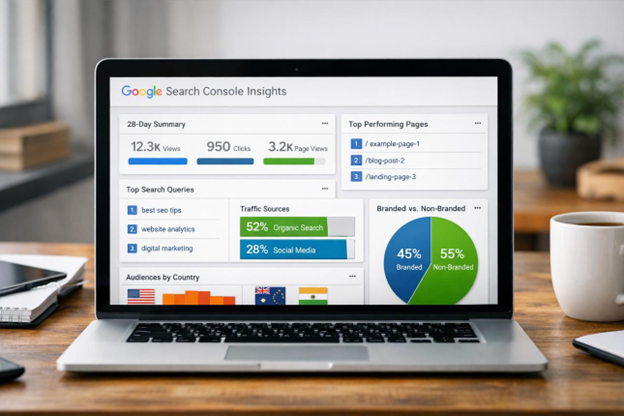
Both platforms can rank well on Google, but WordPress gives you more technical and content SEO control, while Shopify covers the essentials for product and collection pages. Whether you want to attract local customers, generate enquiries or increase online sales, your website needs a strong SEO foundation.
When comparing WordPress vs Shopify SEO, both platforms cover the essentials needed to optimise a website for search engines. Where they differ is in the level of flexibility and control they give you.
WordPress SEO: What You Can Control
WordPress is particularly powerful for businesses that rely on organic traffic and content marketing.
With plugins such as Rank Math and Yoast SEO, you can manage:
- SEO titles and meta descriptions.
- XML sitemaps and indexing settings.
- Canonical URLs and redirects.
- Schema markup and structured data.
- Image optimisation and alt text.
- Internal linking and content structure.
- Custom URL structures.
- Technical SEO configurations.
WordPress also provides extensive flexibility for publishing blogs, creating location-specific landing pages and building topic clusters around your services.
For example, a UK digital marketing agency could create separate service pages for SEO, web design, Google Ads and social media marketing, supported by informative blog articles.
This creates more opportunities to target relevant search terms and attract customers at different stages of their buying journey.
Shopify SEO: What You Can Control
Shopify also provides several built-in SEO features, including:
- Customisable page titles and meta descriptions.
- Automatic XML sitemap generation.
- SSL certificates.
- Image alt text.
- Canonical tags.
- Editable URL handles.
- Mobile-responsive themes.
These features make Shopify a practical choice for ecommerce businesses that want to optimise product and collection pages without managing multiple technical tools.
Shopify does, however, have structural limitations, particularly around URL organisation and deeper technical customisation.
SEO Verdict: WordPress vs Shopify
WordPress generally offers greater SEO flexibility, especially for content-heavy businesses that need custom landing pages, advanced internal linking and detailed technical optimisation.
Shopify is also capable of achieving strong search visibility, particularly for product-focused websites.
Our recommendation: Choose WordPress if content marketing, local SEO and organic lead generation are central to your growth strategy. Choose Shopify if your primary objective is to sell products through search engines and other marketing channels.
2. WordPress vs Shopify Ecommerce: Which Is Better for Online Stores?

If selling products online is your main objective, Shopify is usually the faster route to launch, while WooCommerce on WordPress gives you more control over how your store works. Either way, ecommerce functionality should be one of your biggest considerations.
The WordPress vs Shopify ecommerce comparison is particularly important because both platforms can support online stores, but they approach ecommerce management differently.
Ecommerce with WordPress and WooCommerce
WordPress uses WooCommerce to provide ecommerce functionality.
WooCommerce allows businesses to build online stores with features such as:
- Product listings and categories.
- Shopping carts and checkout.
- Payment gateway integrations.
- Inventory management.
- Shipping and delivery configurations.
- Discount codes and promotions.
- Customer accounts.
- Product variations and attributes.
One of the biggest advantages of WooCommerce is its flexibility. Businesses can customise their online stores according to specific operational requirements.
For example, a business selling customised products may need complex product options, personalised pricing, additional checkout fields or integrations with external systems.
WordPress and WooCommerce can accommodate these requirements through extensions and custom development.
Ecommerce with Shopify
Shopify was built for ecommerce from the ground up.
It provides a single dashboard for managing products, customers, payments and orders.
Its main ecommerce advantages include:
- Easy product and inventory management.
- Integrated checkout experience.
- Multiple payment provider options.
- Discount and promotional features.
- Shipping integrations.
- Abandoned checkout recovery features.
- Access to a large app ecosystem.
- Support for online and in-person selling.
Shopify is particularly useful for businesses that want to focus on selling products rather than managing website infrastructure.
Ecommerce Verdict: WordPress vs Shopify
Shopify is generally the easier choice for businesses whose primary objective is running an online store.
WordPress with WooCommerce is better suited to businesses that need greater customisation, content flexibility or specialised ecommerce functionality.
| Business Requirement | Recommended Platform |
| Clothing and fashion store | Shopify |
| Beauty and skincare products | Shopify |
| Small retail ecommerce store | Shopify |
| Custom product configurations | WordPress + WooCommerce |
| Content-led ecommerce business | WordPress + WooCommerce |
| Membership-based website | WordPress |
| Complex custom integrations | WordPress |
Neither platform guarantees higher sales on its own. Your product quality, pricing, website experience, marketing strategy and checkout process all influence ecommerce performance.
3. Website Design and Customisation: Which Platform Gives You More Control?
WordPress wins on design freedom; Shopify wins on speed to a polished storefront. Your website is often the first impression potential customers have of your business, so it should reflect your brand identity, communicate your value and make it easy for visitors to take action.
WordPress: Extensive design flexibility through themes, page builders such as Elementor, the block editor and custom development.
You can create unique layouts, custom landing pages, interactive sections and tailored user experiences.
Shopify: Professionally designed themes and a visual editor that make customising an online store straightforward. You can adjust colours, typography, layouts and product presentation.
More advanced customisation is possible through Shopify’s Liquid templating language and custom development, although some areas of the platform remain restricted.
Verdict: WordPress is generally better for businesses that need complete design flexibility. Shopify is a practical option for brands that want a professional ecommerce design with less technical complexity.
4. WordPress vs Shopify Costs: What Does a Website Cost in the UK?
There is no fixed answer: costs depend on the size of the project, design requirements, functionality and the level of development expertise involved.
WordPress being open-source does not mean a professional website is free to build. Equally, Shopify’s monthly subscription is only one part of the overall cost of running an online store.
WordPress Website Costs
Typical cost considerations include:
- Domain registration.
- Web hosting.
- Premium themes, if required.
- Premium plugins and integrations.
- Website design and development.
- Security and maintenance.
- Custom functionality.
WordPress lets you choose your own hosting provider and decide how much to invest in each part of your website.
Shopify Website Costs
Shopify costs typically include:
- Monthly or annual subscription.
- Domain registration.
- Premium themes, if required.
- Paid applications.
- Payment processing fees.
- Custom design and development.
- Additional integrations.
Shopify offers several subscription tiers, so you can pick a plan that matches your operational needs.
Which Platform Is More Affordable in the UK?
There is no universal winner on cost.
WordPress may carry lower ongoing platform costs, but professional development, hosting and maintenance still need to be budgeted for.
Shopify provides a more predictable hosted solution, although subscription fees, applications and transaction-related costs can increase as the business grows.
The better approach is to calculate the total cost of ownership across a 12 to 36 month period rather than comparing initial setup prices alone.
5. WordPress vs Shopify Speed: Which Platform Performs Better?
Neither platform is automatically faster; speed comes down to how the site is built and hosted. Website speed directly affects user experience, and a slow website frustrates visitors, increases abandonment and makes it harder to convert potential customers.
Both platforms can deliver fast-loading websites, but performance depends on how they are implemented.
WordPress Performance
WordPress performance depends on several factors:
- Quality of web hosting.
- Theme and page builder configuration.
- Image compression.
- Caching and optimisation.
- Plugin selection.
- Database optimisation.
- Content delivery network (CDN) configuration.
A well-developed WordPress website with optimised hosting and a lightweight design can deliver excellent performance.
However, excessive plugins, poorly coded themes and unoptimised media can negatively affect loading times.
Shopify Performance
Shopify manages its own hosting infrastructure on a platform built for ecommerce operations.
This reduces the amount of server-level optimisation required by store owners.
However, installing too many applications, using heavy themes and adding unnecessary scripts can still affect storefront performance.
Verdict: Neither platform automatically guarantees a faster website. WordPress offers more control over performance optimisation, while Shopify reduces the technical responsibility associated with hosting and infrastructure.
6. Which Platform Is Better for Business Growth and Scalability?
Your website needs to support your business today and as your requirements evolve.
Both platforms scale, but their strengths depend on the direction of your growth plans.
WordPress is particularly useful when you want to expand a website beyond standard pages and ecommerce functionality.
For example, you could introduce:
- Multiple service categories.
- Location-specific landing pages.
- Booking and appointment systems.
- Customer portals.
- Membership platforms.
- Custom CRM integrations.
- Advanced content marketing sections.
Shopify is particularly useful for ecommerce businesses looking to expand product catalogues, manage larger order volumes, introduce additional sales channels and integrate new applications.
The right choice depends on whether your growth strategy requires more website flexibility or more streamlined ecommerce operations.
7. WordPress vs Shopify: Which Should UK Small Businesses Choose?
No single platform is right for every UK business. The decision should reflect how your company operates and what you want your website to achieve.
Choose WordPress If:
- You run a service-based business.
- SEO and content marketing are important to your growth.
- You need customised landing pages.
- You want greater control over your website.
- You require advanced integrations.
- You plan to build a content-rich website.
- You want to combine business services with ecommerce.
Choose Shopify If:
- You primarily sell physical or digital products.
- You want to launch an online store quickly.
- You need straightforward inventory management.
- You want a centralised ecommerce dashboard.
- You prefer managed hosting and platform maintenance.
- Your business focuses on online retail and product sales.
What If Your Business Needs Both?
Some businesses need a content-rich website alongside a dedicated ecommerce operation, and that is a legitimate setup.
In some cases you can use WordPress for content management and Shopify for ecommerce. This does, however, require careful planning around integrations, customer journeys, analytics and ongoing website management.
The objective should always be a simple, consistent experience for customers rather than unnecessary technical complexity.
8. Can You Switch from WordPress to Shopify or Shopify to WordPress?
Yes. Businesses can migrate between WordPress and Shopify when their website requirements change.
A business might start on WordPress for its flexibility, then decide that Shopify suits a growing product catalogue better.
Similarly, an established Shopify store might move to WordPress and WooCommerce to gain greater control over its website functionality.
However, website migration requires careful planning.
Important considerations include:
- Exporting and transferring product information.
- Migrating customer and order data.
- Preserving existing website content.
- Setting up appropriate URL redirects.
- Maintaining SEO metadata.
- Updating internal links.
- Testing payment and checkout functionality.
- Monitoring search engine indexing after migration.
A poorly managed migration can cause broken links, lost search visibility and disruption to the customer experience.
Professional development support minimises these risks and makes sure your new website is ready for business from day one.
Final Verdict: WordPress vs Shopify – Which One Should You Choose?
The choice between WordPress and Shopify comes down to your business objectives.
WordPress is an excellent choice for businesses that prioritise website flexibility, content marketing, SEO and customised functionality. It gives you more control over how your website is structured and developed.
Shopify is a strong choice for businesses focused on ecommerce. Its hosted infrastructure, product management tools and integrated checkout make it easier to operate an online store.
Here is our final recommendation:
| Your Business Goal | Best Choice |
| Generate service enquiries | WordPress |
| Build an SEO-focused business website | WordPress |
| Publish regular blogs and resources | WordPress |
| Build a customised website | WordPress |
| Launch an online retail store | Shopify |
| Manage products and orders | Shopify |
| Simplify ecommerce operations | Shopify |
| Build a customised WooCommerce store | WordPress |
Choosing the right platform is only the first step. Website design, technical performance, user experience and ongoing digital marketing matter just as much for long-term success.
Build a Website That Supports Your Business Growth with Walden Waves
Choosing between WordPress and Shopify can feel complicated, particularly when you are planning for long-term growth.
At Walden Waves, we help UK businesses build professional websites designed around their objectives, customers and marketing strategies.
Whether you need a business website, a customised WordPress solution or a high-performing Shopify store, our team can help you choose the right platform and turn your requirements into a practical website solution.
Explore our development services:
- WordPress Development Services – Build a flexible, SEO-friendly website tailored to your business.
- Shopify Development Services – Create a professional ecommerce store designed to support online sales.
Ready to build your next website?
Contact Walden Waves today to discuss your project and find the right website solution for your business.
Frequently Asked Questions
Is WordPress better than Shopify for SEO?
WordPress generally offers greater SEO flexibility through plugins, custom URL structures, technical configurations and advanced content management. However, Shopify also provides essential SEO features and can achieve strong organic search performance when properly optimised.
Is Shopify better than WordPress for ecommerce?
Shopify is generally easier to manage for businesses focused primarily on selling products online. WordPress with WooCommerce is more suitable for businesses that need customised ecommerce functionality, advanced integrations or greater website control.
Is WordPress cheaper than Shopify in the UK?
WordPress software is free, but hosting, premium plugins, development and maintenance all add to the cost. Shopify requires a recurring subscription, plus potential app and payment processing fees. The more affordable option depends on your website requirements.
Can WordPress handle a large ecommerce store?
Yes. WordPress with WooCommerce can support large product catalogues and complex ecommerce operations when supported by suitable hosting, development, database optimisation and maintenance.
Can Shopify websites rank on Google?
Yes. Shopify websites can rank on Google through properly optimised product pages, collection pages, technical SEO, quality content and relevant backlinks.
Which platform is better for a UK startup?
It depends on the startup’s business model. WordPress is generally suitable for service-based startups and businesses focused on content and lead generation. Shopify is often a better starting point for product-based businesses that want to sell online.
Do I need a professional agency to build a WordPress or Shopify website?
Not necessarily, as both platforms provide tools for building a website yourself. A professional development agency helps where you need custom design, technical SEO, integrations, performance optimisation and scalability