
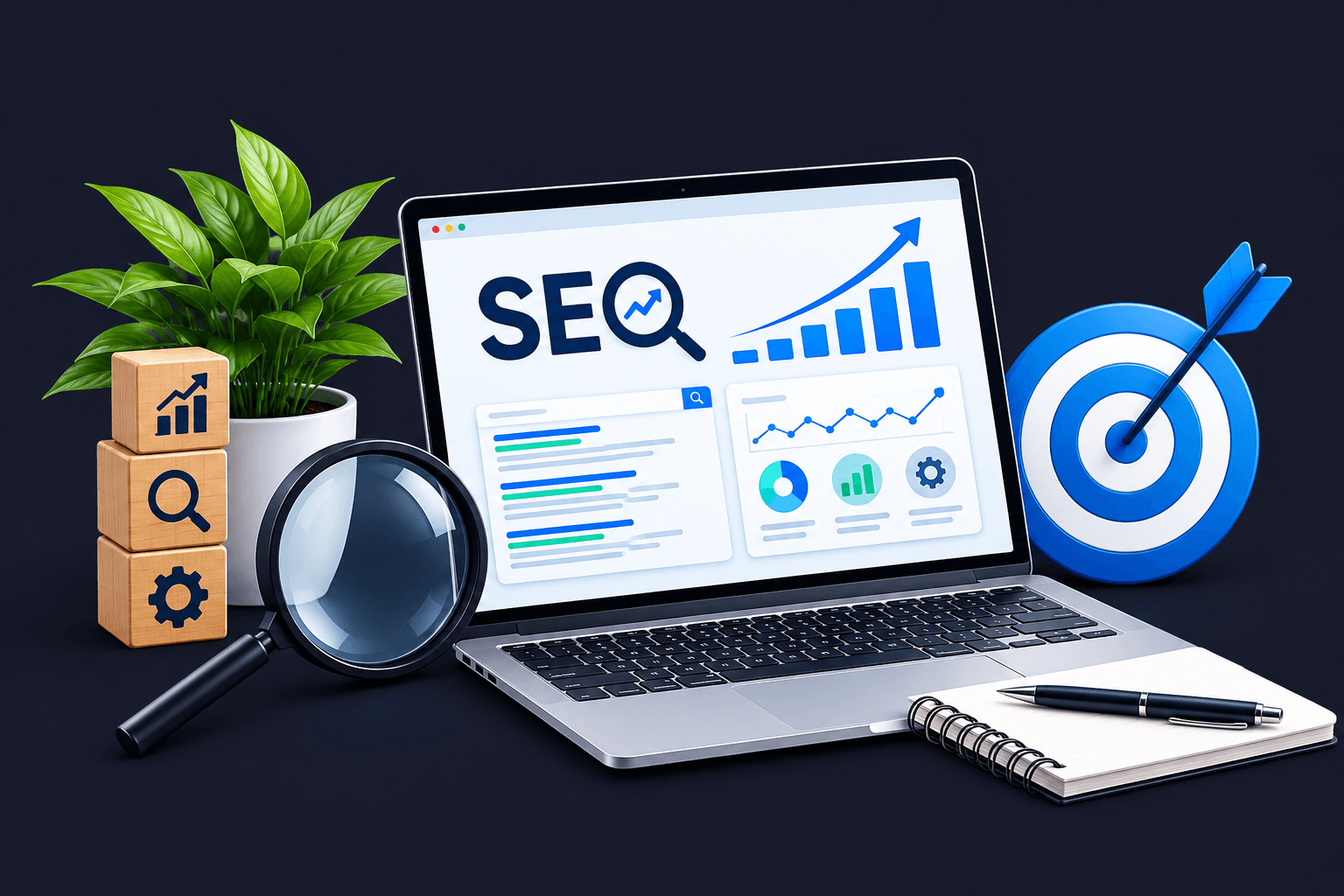
SEO Services help businesses improve how their websites are discovered and understood through relevant search queries. Modern SEO can involve technical optimisation, content, local search, internal linking, authority building and visibility across AI-powered search experiences. For businesses in London and across the London, the objective should be more than attracting traffic: SEO should help the right people discover useful information and move towards becoming customers. Walden Waves’ SEO services cover local, on-page, off-page, content and AI-search considerations.
What Do SEO Services Include?
SEO is a broad discipline rather than a single task. A professional campaign may include technical audits, keyword research, on-page optimisation, content planning, internal linking, local SEO, digital PR and authority development. The balance depends on the website, industry, competition and business goals.
Technical SEO Creates the Foundation
Search engines need to be able to access, crawl and understand a website. Technical SEO can therefore examine site architecture, indexing, redirects, canonicalisation, broken links, mobile usability, page performance and other technical factors. Fixing these issues can make the website easier to maintain as content and services expand.
On-Page SEO Connects Content With Search Intent
A page should clearly answer the question or fulfil the task behind a search. That means writing useful headings, explanations, supporting information and calls to action rather than repeatedly inserting the same keyword. Search intent can be informational, commercial, navigational or transactional, and content should reflect the intent it is trying to satisfy.
Local SEO Helps Businesses Reach Nearby Customers
For businesses that serve defined geographical areas, local SEO can be particularly important. Local optimisation can involve Google Business Profile activity, location information, service-area content, local citations, reviews and locally relevant pages. The information should accurately represent where the business operates rather than creating pages for locations it does not genuinely serve.
Content Builds Topical Relevance
Useful content can help a website demonstrate depth around important services. Instead of publishing unrelated articles simply to increase page count, businesses can build topic clusters around customer questions, services, problems, comparisons and practical guidance. Internal links can then connect supporting articles with the most important service pages.
Internal Linking Supports Users and Search Engines
Internal links create relationships between pages on the same website. A blog about technical SEO can link to the main SEO service page. An article about website performance can connect to web development. A guide about digital advertising can connect to relevant marketing services. These links can help visitors discover more information and help search engines understand the site’s structure.
Authority and Backlinks Still Require Quality
External links and mentions can contribute to a website’s authority, but quality and relevance matter. Businesses should avoid tactics designed primarily to manipulate rankings. Relevant editorial mentions, useful resources, genuine partnerships and credible industry coverage can be more meaningful than large volumes of low-quality links.
SEO for AEO, GEO and AI Search
Search behaviour increasingly includes conversational queries and AI-generated answers. This makes clear, well-structured information useful beyond traditional search results. AEO focuses on answering questions directly, while GEO and related AI-search practices emphasise context, entities, authority and information that can be understood by generative systems. Businesses should still prioritise accuracy and usefulness rather than trying to write artificial content for algorithms.
How SEO Supports Business Growth
The commercial value of SEO depends on attracting relevant visitors and helping them take the next step. A service page that ranks for an appropriate commercial query can support enquiries. An informational article can introduce a business to people earlier in the buying journey. Local content can help customers find a nearby provider. The strategy should therefore connect search visibility with conversion opportunities.
What Should You Ask an SEO Provider?
- What will you optimise first and why?
- How will you measure progress against business goals?
- How will technical SEO be handled?
- How will content be researched and reviewed?
- How will local search be addressed if relevant?
- How will links and authority be developed?
- How will AI and answer-engine visibility be considered?
Frequently Asked Questions
What are SEO Services? SEO Services are professional activities designed to improve a website’s visibility for relevant searches. They can include technical SEO, on-page optimisation, content, local SEO, internal linking and authority development.
How long does SEO take? There is no universal timeframe. Results depend on competition, website condition, authority, search demand, content quality and the scope of the campaign.
Is SEO only about keywords? No. Keywords are one part of SEO. Search intent, technical structure, content quality, usability, internal linking, local relevance and authority can also be important.
Can small businesses benefit from SEO Services? Yes, where search is an important route to customers. The strategy should match the business’s market, competition and resources.
Final Thoughts
SEO is most effective when it is treated as an ongoing business-growth discipline rather than a one-off ranking exercise. Strong SEO Services connect technical foundations, useful content, local relevance, internal linking and authority with the real questions customers are asking. Walden Waves UK can support businesses looking to build a search strategy that works across Google and emerging AI-driven discovery experiences.